


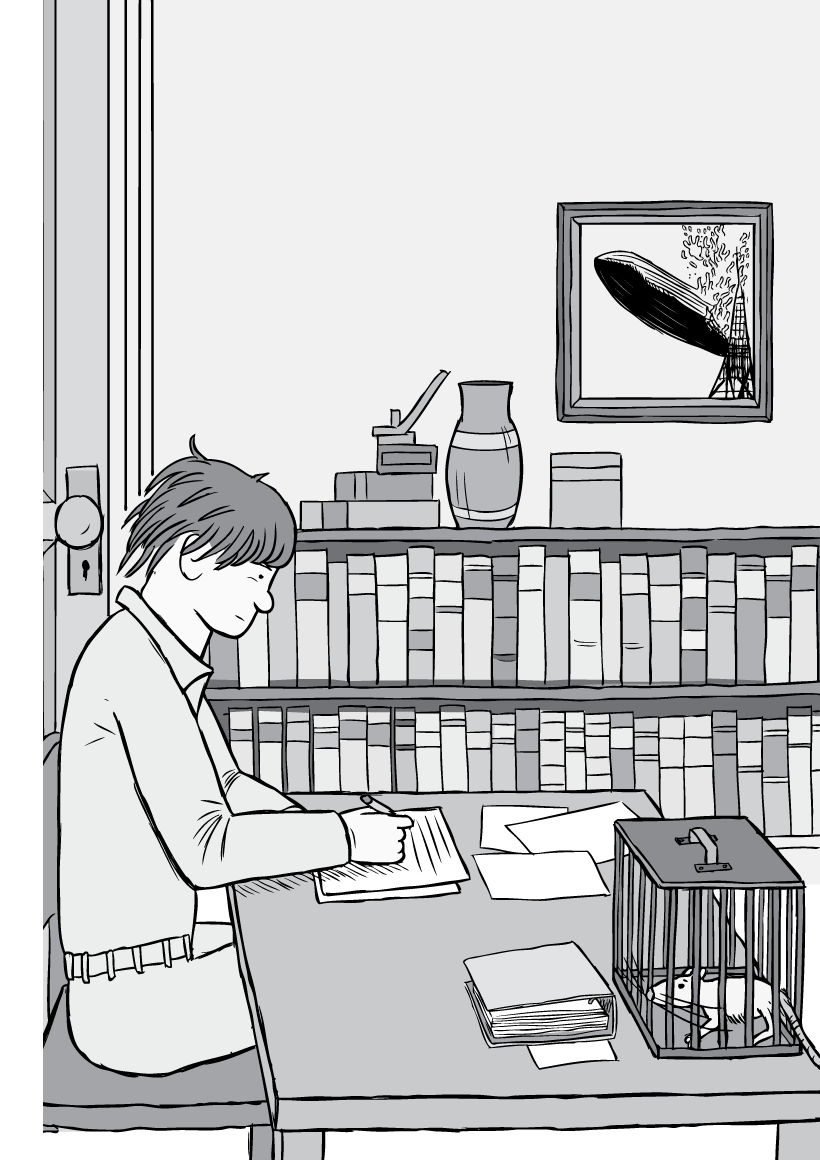
I decided to make Rat Park a comic about the rat experiments only. My goal was to describe the researchers’ scientific method as concisely, accurately and entertainingly as possible. I chose not to present the experiments as ‘proof’ of anything regarding human drug-taking. Because, well, they’re not.
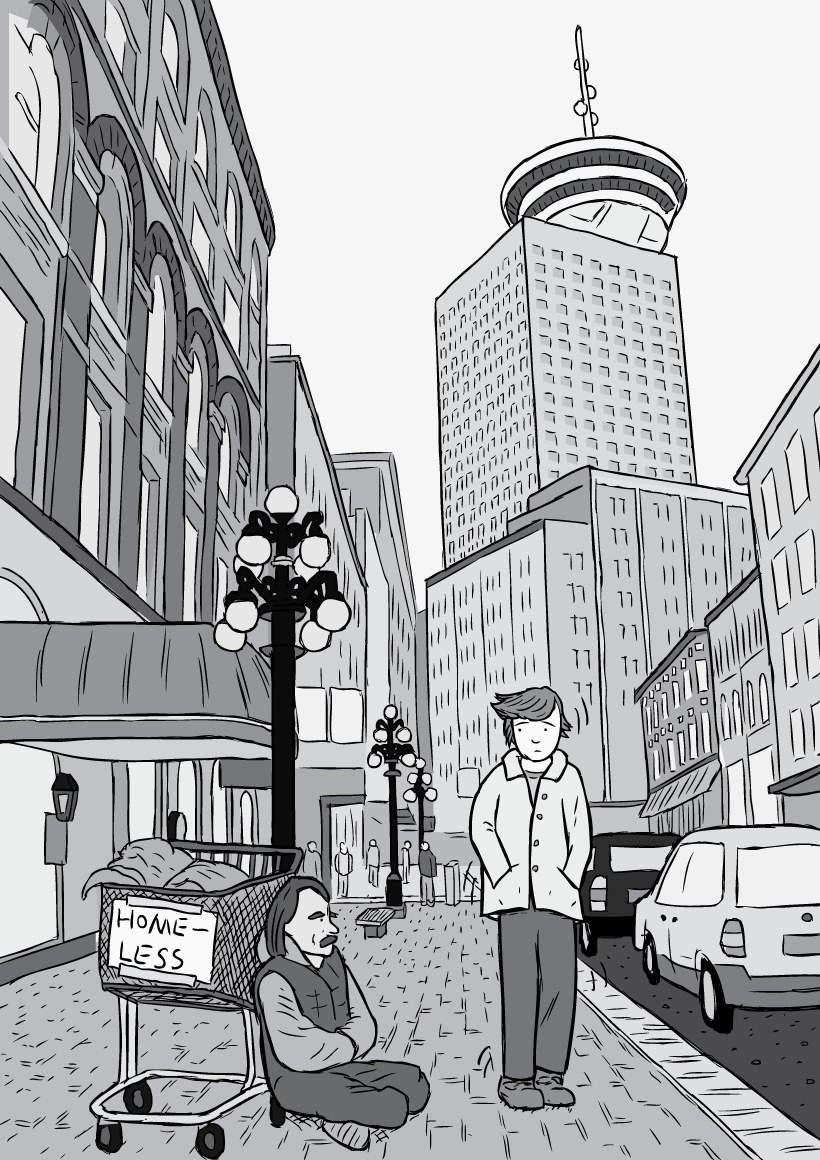
Yet the question hangs at the end of the comic. Bruce Alexander wanders the streets of Vancouver, haunted by the Rat Park findings. Wondering if they hold relevance for human behaviour. For human addictions.
This article discusses some of the research that Bruce Alexander has done since the Rat Park experiments.
The Globalization of Addiction
Anyone whose interest was piqued by my Rat Park comic should immediately track down Bruce Alexander’s book The Globalization of Addiction (2008).
The book makes several assertions which I will drastically paraphrase:
- People can become addicted to drugs, but it is not the drugs themselves that cause the addictions. (Though Bruce acknowledges that certain drugs have properties which lend themselves to addictions – e.g. heroin and alcohol).
- Drug addictions arise from deeper psychological problems/imbalances in a person’s life. They are a way for ‘socially dislocated’ people to cope/adapt to their psychological state. They form these addictions because a socially-dislocated life without an addiction would be too mentally crushing.
- Bruce conceives addictions as an ‘overwhelming devotion to a narrow lifestyle’. This is a type of ‘adaptive’ behaviour to supplant an otherwise bleak existence without social integration.
- Drug addictions are just one example of a multitude of addictions in modern society. For example:
- gambling addictions
- food addictions / compulsive eaters
- video game, internet or television addictions
- ‘shopaholic’ consumption
- addiction to long working-hours (e.g. working 60-hour weeks in the office)
- addiction to status and power (e.g. certain politicians / businessmen)
- addiction to religious zealotry (fundamentalists)
- These addictions are manifestations of the same psychological processes which create drug addictions. They are narrow fixations which offer a bearable substitute to otherwise unbalanced / unfulfilled life. They are the result of socially dislocated people adapting as well as they can to social circumstances.
- ‘Social dislocation’ theory of addiction has a long history of evidence. For example, the previously-responsible drinking habits of Scottish highlanders turned to alcoholism after their forced displacement by the British in the 18th century.
- Various factors in a person’s life can lead to social dislocation. However, the current dominant force is the alienating influence of unbridled free-market capitalism.
- Alexander argues that the influence of capitalism should be balanced or subordinated by other social institutions and traditions. He argues that we should make human well-being our primary concern, rather than the health of ‘the market’ or ‘the economy’.
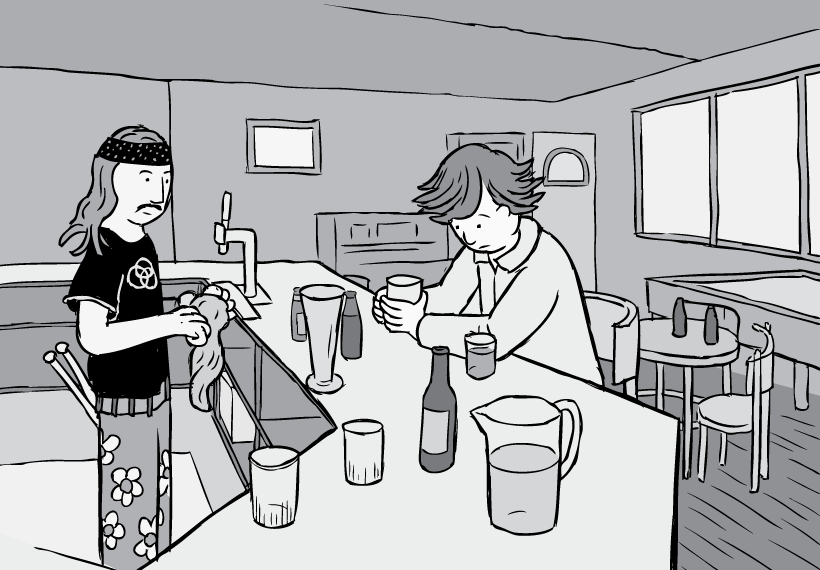
Though I’m not an expert in psychology or addiction, I was impressed by the body of evidence which Prof. Alexander assembled in the book, as well as the humanity shown in his views of addicted people. It helped me see a bigger problem at work, and I no longer see drug addictions as a ‘special cause’ which are inherently caused by the substances themselves.
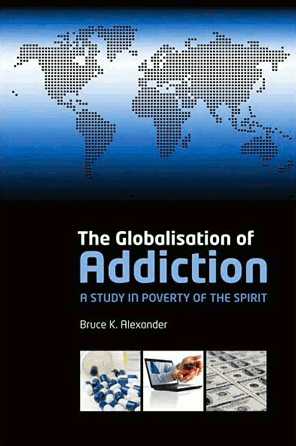
Track down a copy of The Globalization of Addiction and make up your own mind. (aff: new / used).
Video interview and other resources
This 2011 interview with Bruce Alexander was on public-funded TVOntario‘s long-form journalism show The Agenda with Steve Paikin. Watching Bruce discuss his views in this video was a big reason for me tracking down his book.
The video is also significant for being the first recorded time two Canadians mention ice hockey just three times in a 20 minute conversation.
Also check out Bruce Alexander’s Globalization of Addiction website. Bruce is currently completing a book about the history of psychology.
Tags: addiction, drug addiction, drugs, making of Rat Park, Rat Park
Pingback: The Rat Park Study: Addiction, Isolation and Humanity’s Urgent Need to Connect & Play | PlayGrounding
Dr. Alexander,
I truly enjoyed most of your ideas and even played the segment for an addictions class that I do at Brigham Young University in Utah, US. The students loved it! I would love to interview you. I have order the book and look forward to reading it. I too would love to “murder” the disease model. There is much good in looking at the neurology of addiction but at the end of the day we have to deliver something therapeutic and helpful. Addiction is an riddle wrapped in an enigma.
Regards, Ben
Interesting interview – what Bruce Alexander does not mention is the addiction to hyper-stimulus in the form of highly processed low-value foods This is worth reading I think: https://www.themonthly.com.au/issue/2013/march/1361848247/karen-hitchcock/fat-city
Look great !
Pingback: Rat Park drug experiment cartoon – Stuart McMillen comics
i found some of your work,i understood totally as an lead up to a nite i was attacked earlier this week,
i compared,many factors over again after reading rat park then the lizard stimuli and found scary simularities
please take note and study for a cartoon idea
“the acceptance of anger but strate fear of rage”
i do not mean to spam when i send my friends your cartoons they are just that good. and the information inside is very useful intodays primal
urban jungle we call the streets for the understanding that the world is a very dangerous place and peopledecieve just for the love of it, always looking,every where,to corrupt,to disorientate and put the instant fear factor that most ppl just wont know wht to do
ask me my story and i just may telll,until then
respectfully yours,A.D.
Dude, you are totally freakin awesome for getting this to mainstream.
I once did some comics for a DRUG PROJECT in Wellington, NZ. They went unpublished, but were damn good looking. I think the story lines may have “offended” some people. Twenty years ago now. I have to learn to stick to one thing and not spread thinly over everything.
Now, I am off to create RAT PARK with added variables of CHRONIC PAIN rats and ADHD rats…
See you in fifty years.
Until then, a lot of people (end user / consumers) in trouble!
Pingback: A bustle in the cage-row: the making of Rat Park addiction comic