 |
 |
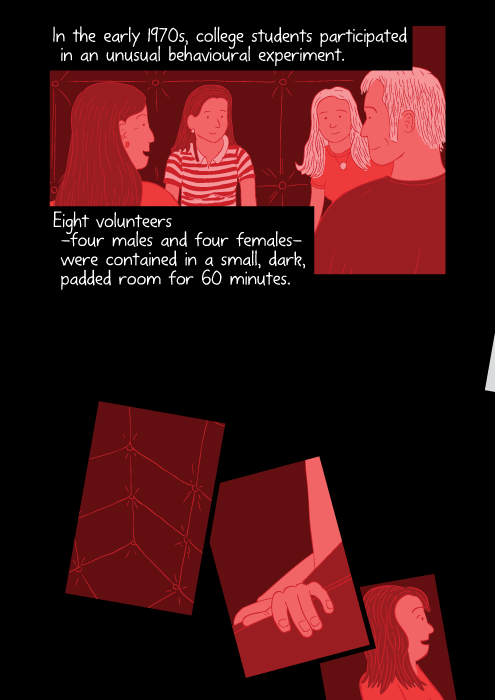
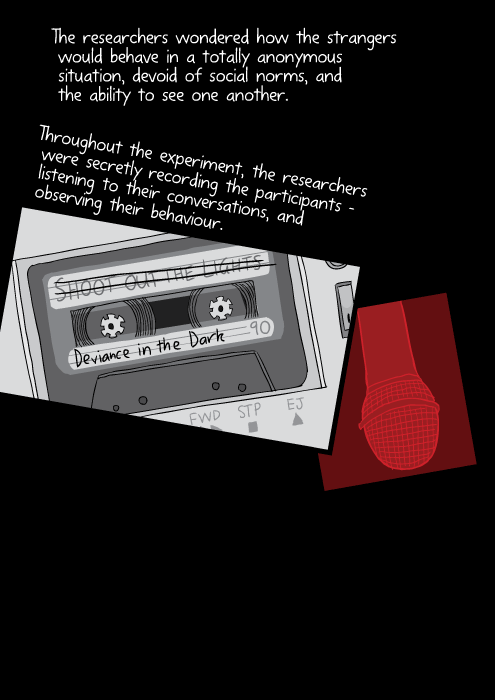
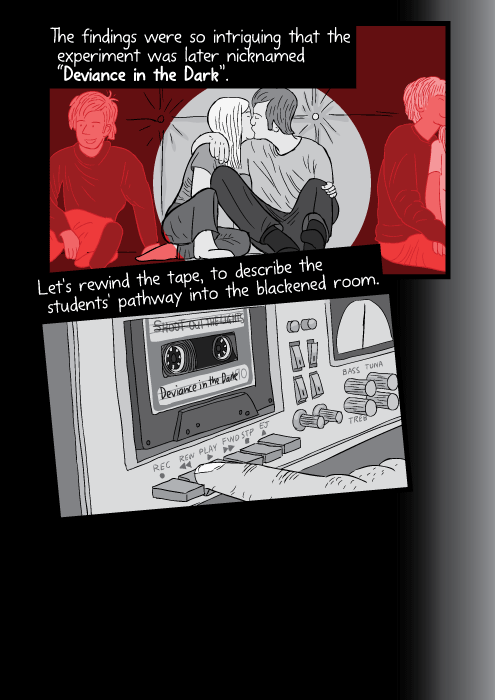
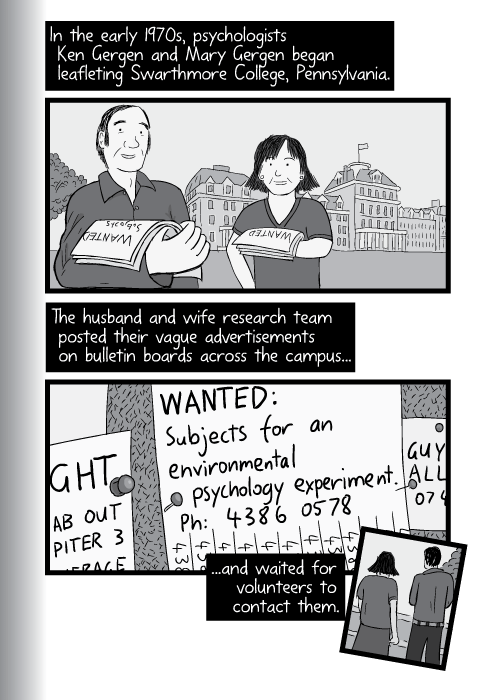
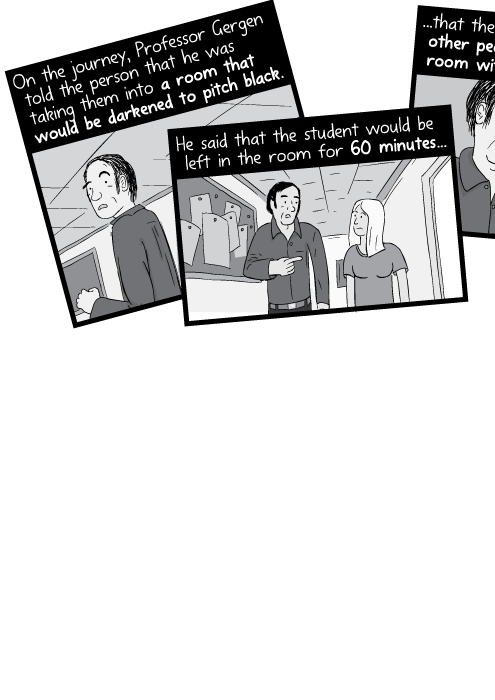
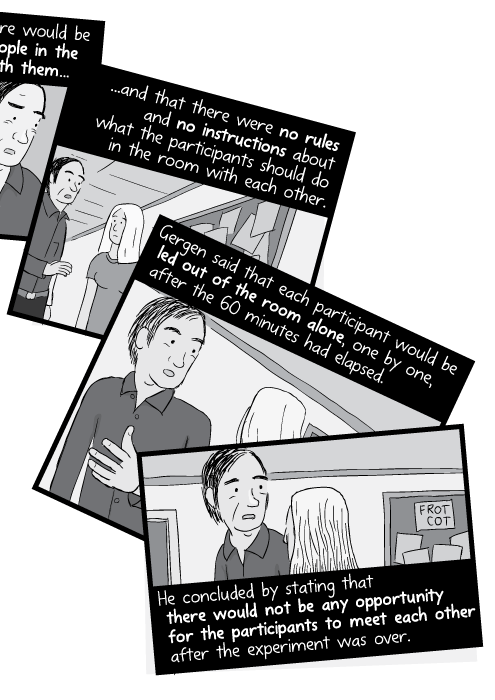
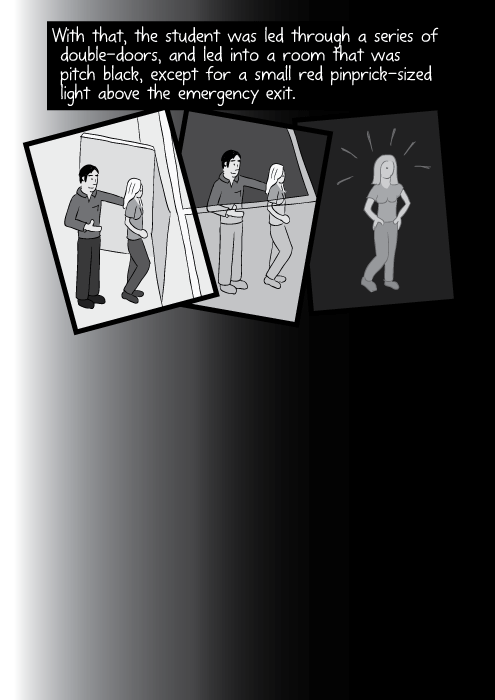
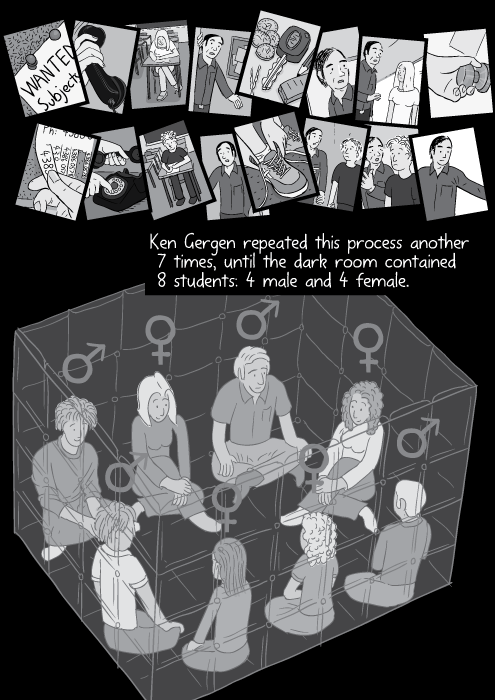
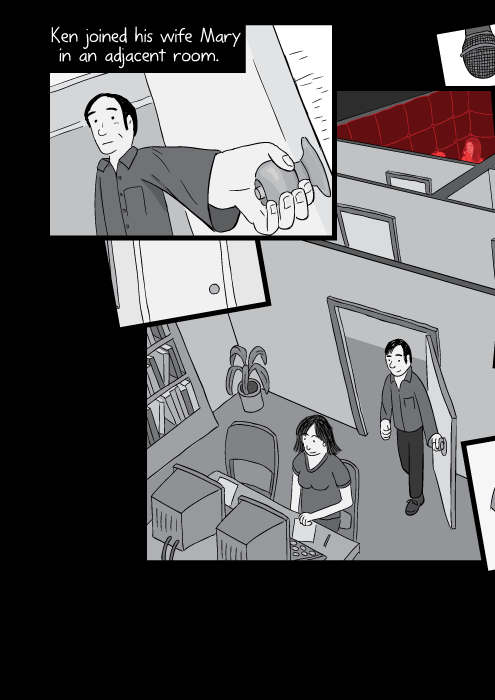
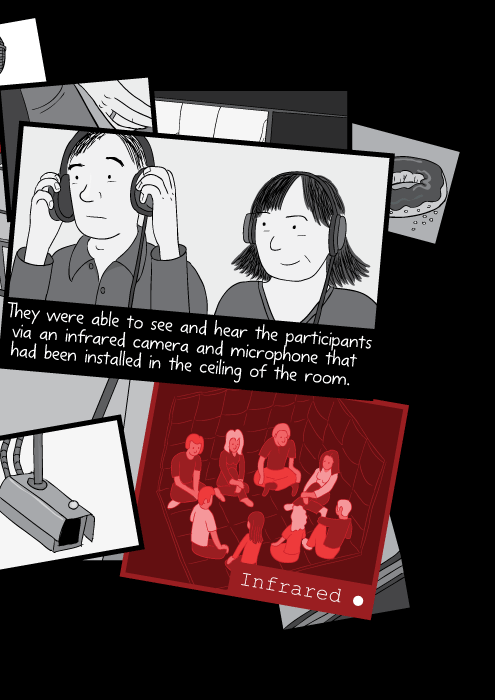
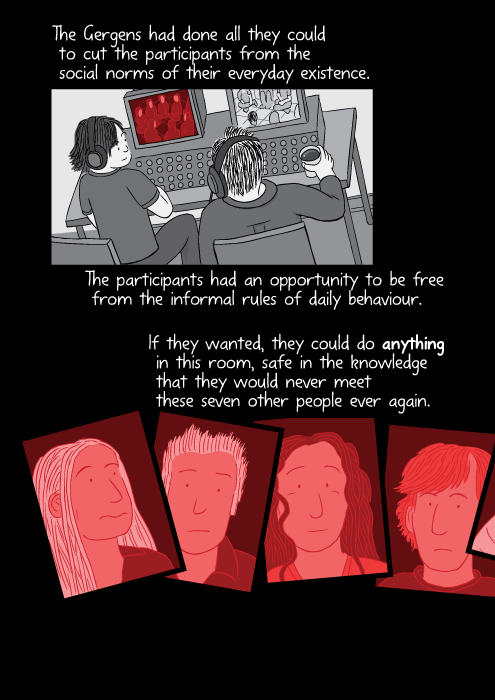
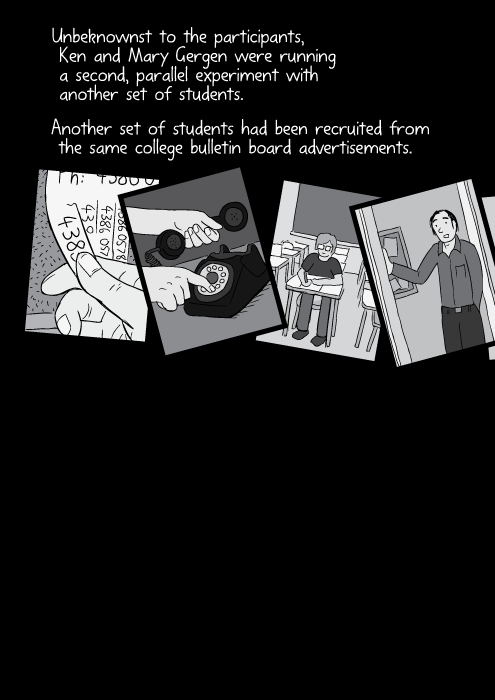
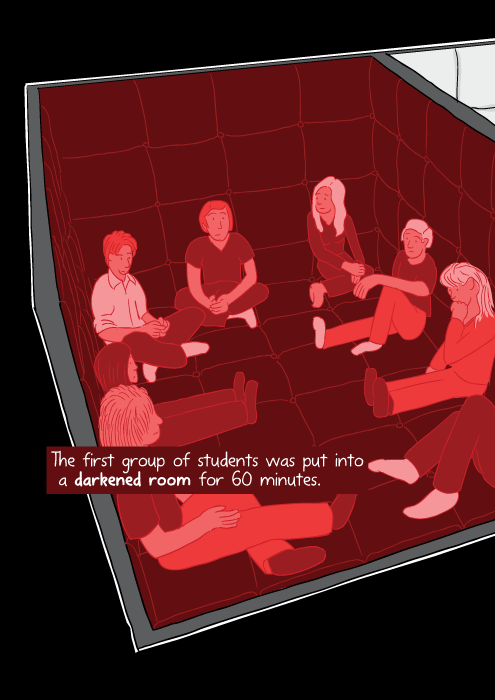
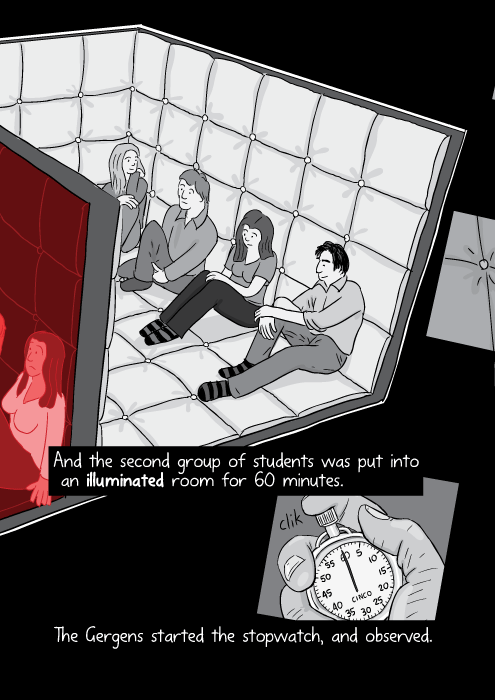
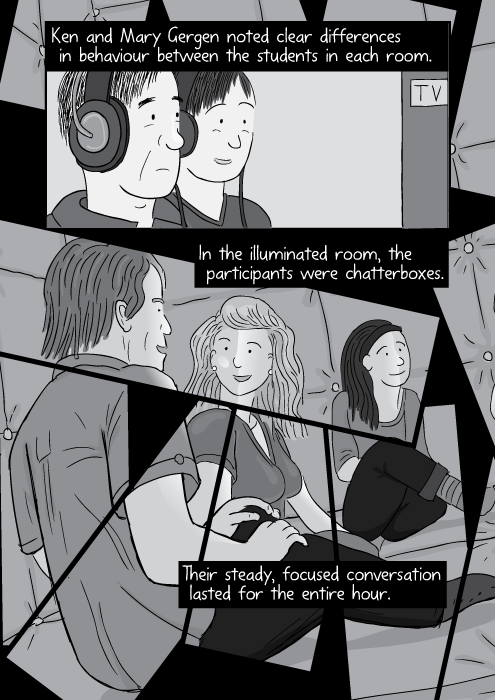
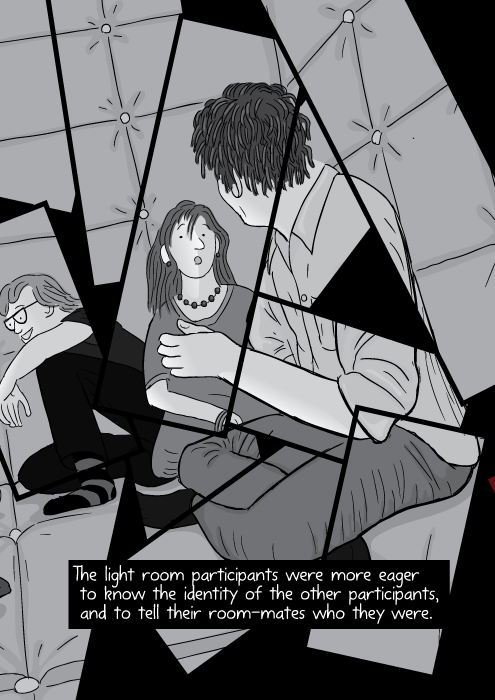
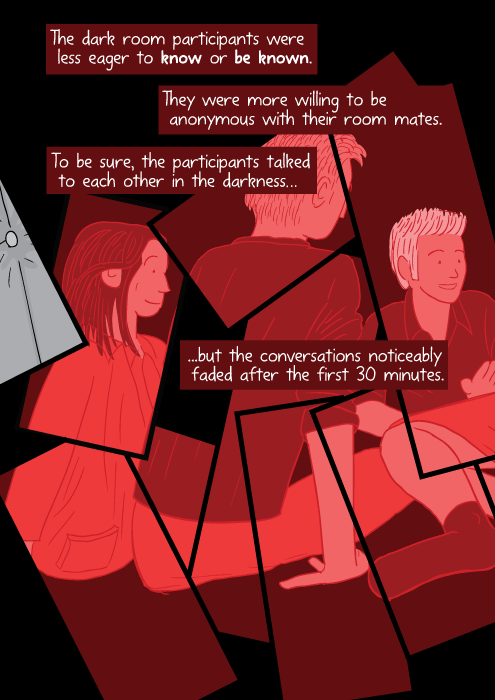
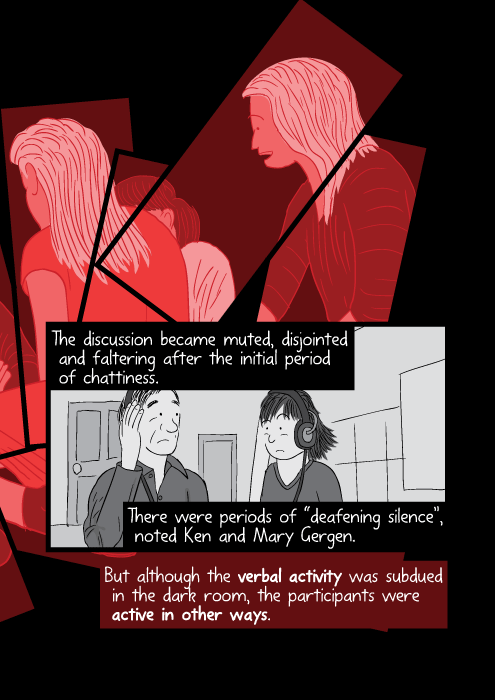
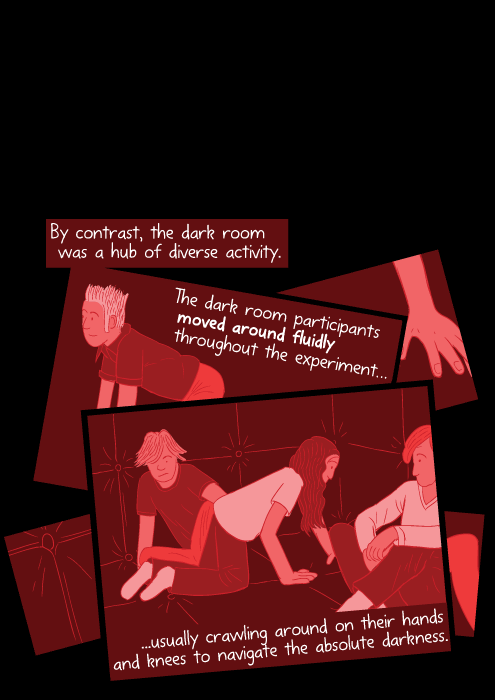
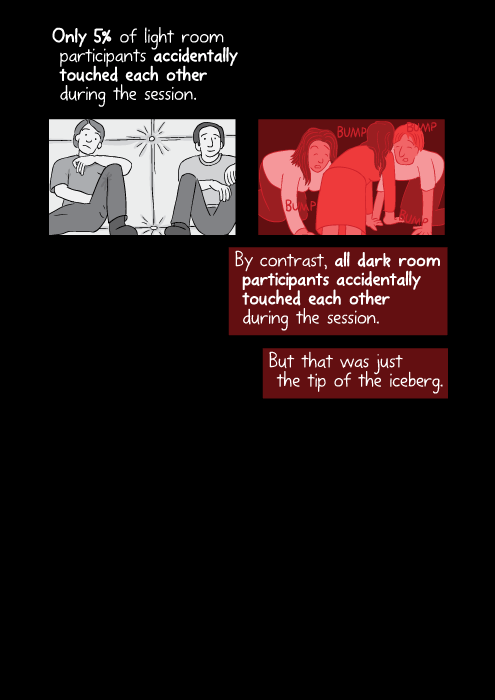
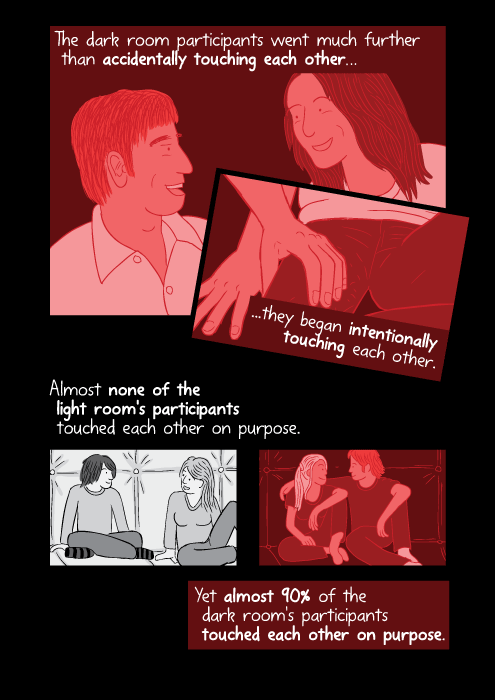
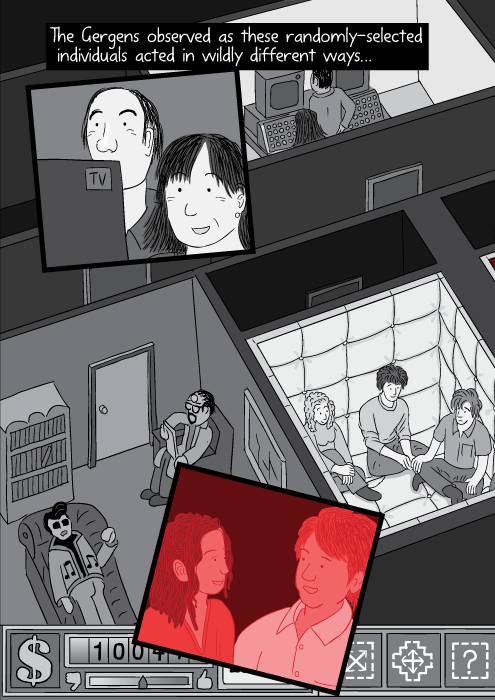
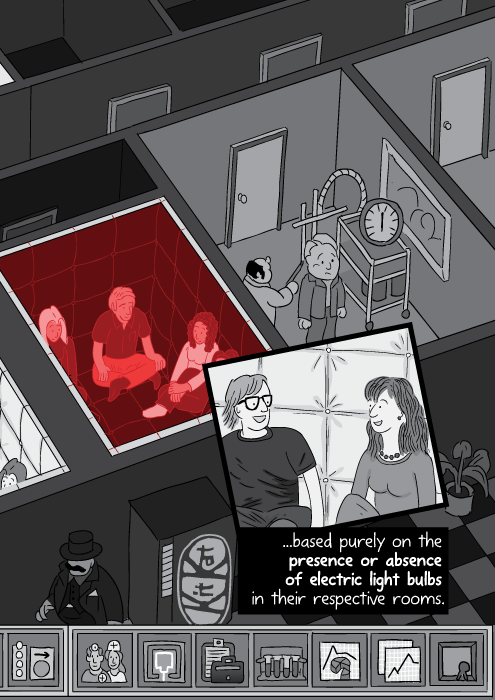
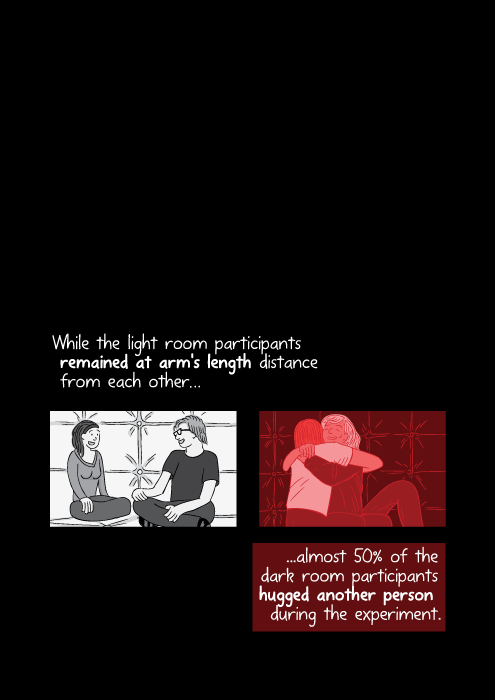
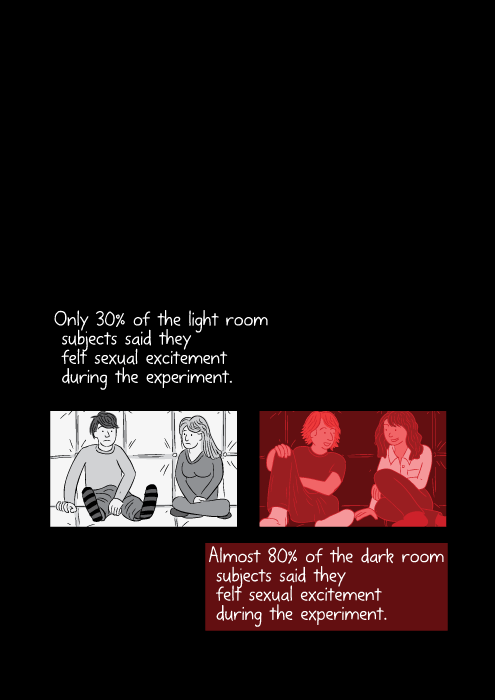
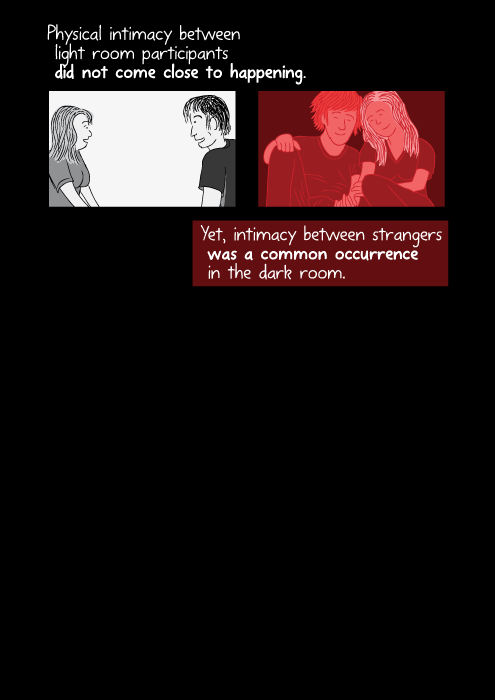
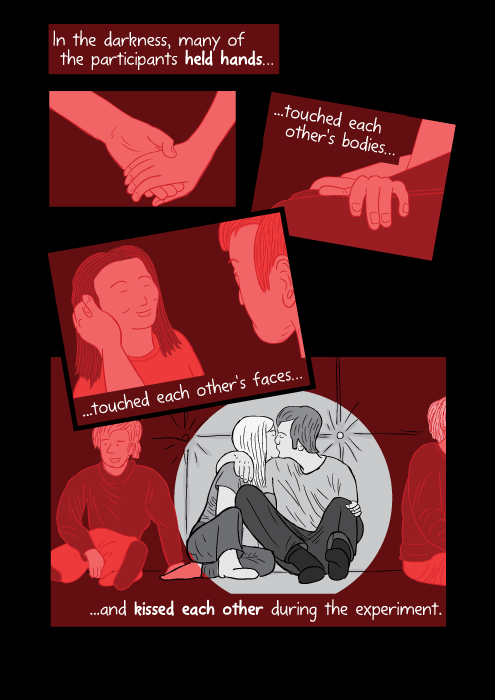
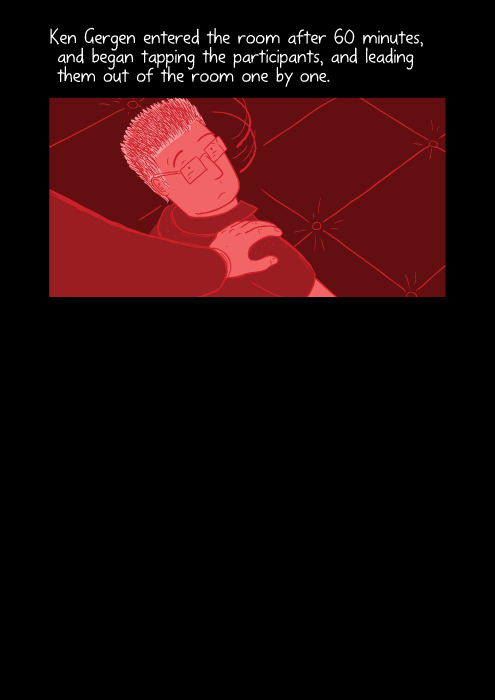
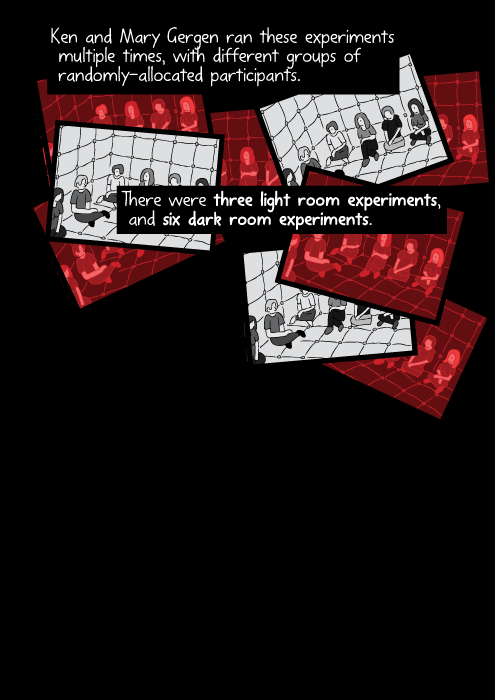
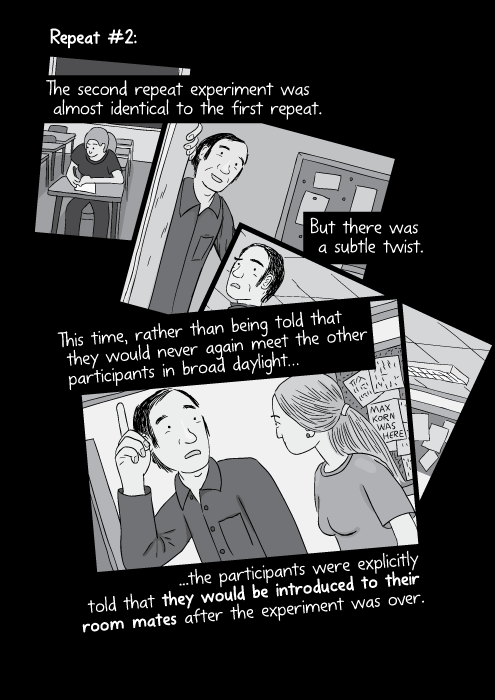
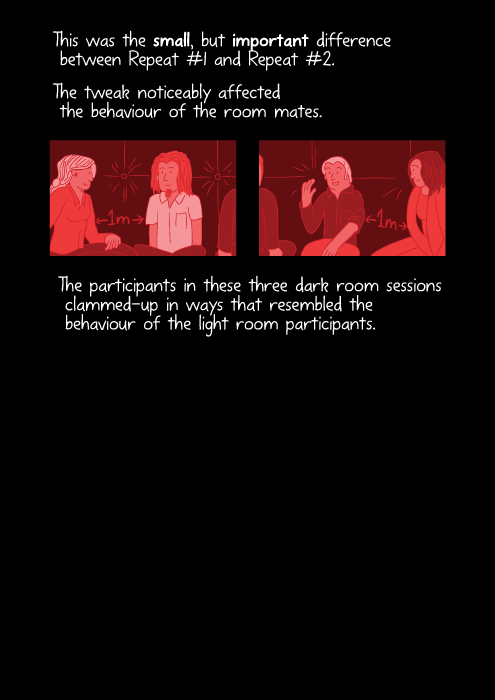
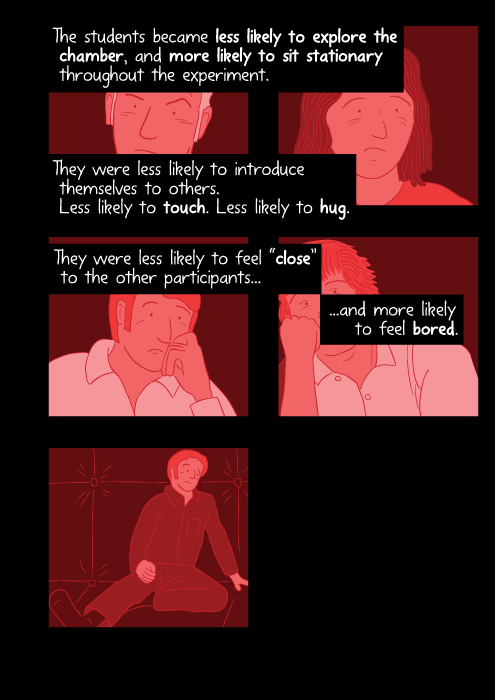
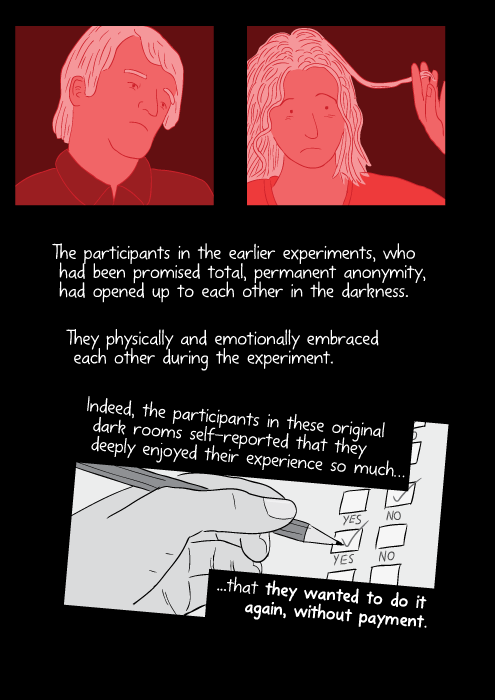
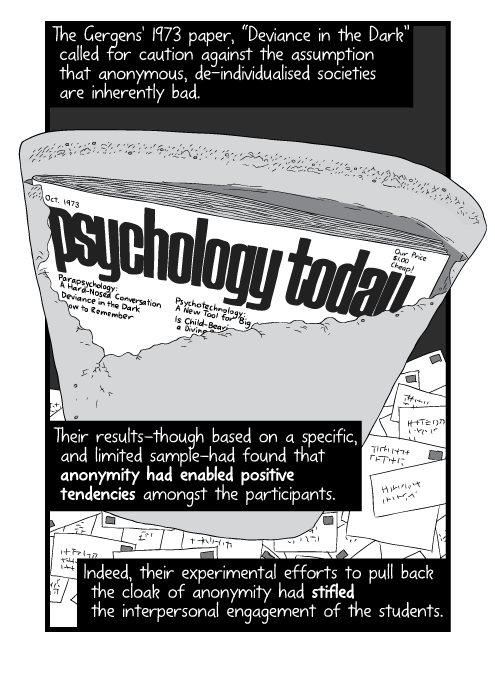
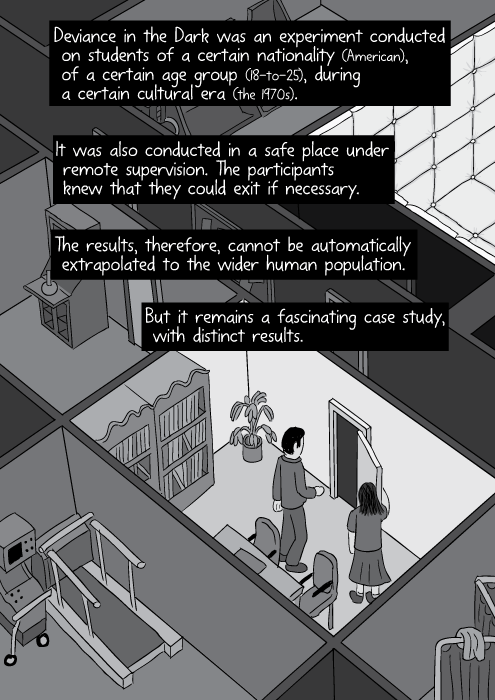
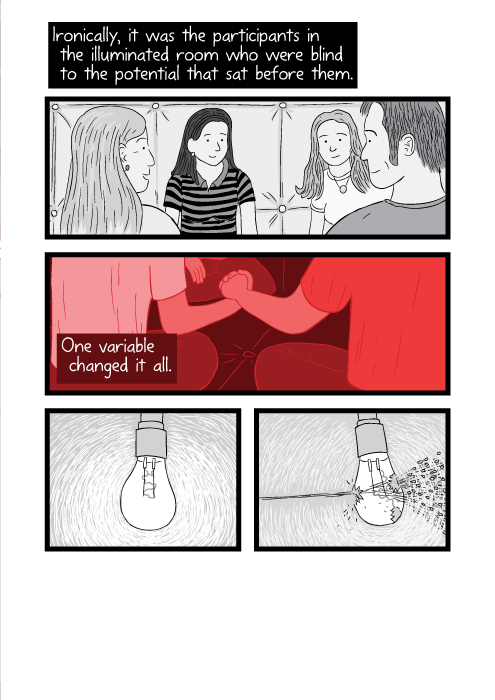
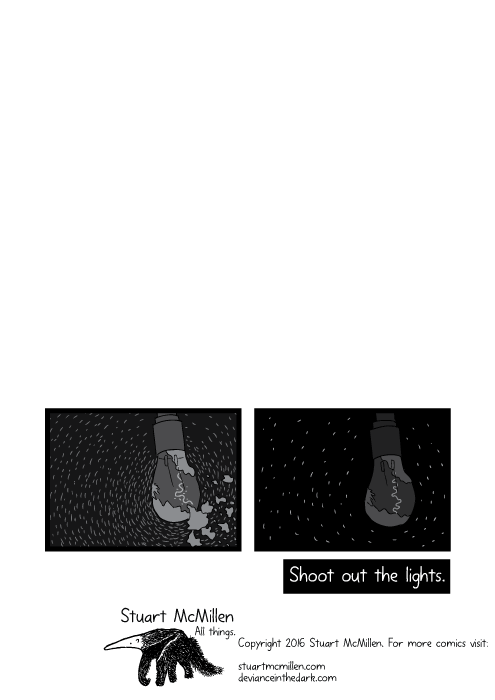
• The Deviance in the Dark experiments were conducted by Ken Gergen and Mary Gergen of Swarthmore College, Pennsylvania. Their findings were published in Psychology Today magazine in October 1973.
• Unfortunately I cannot find academic papers with data tables that reveal the full trends of the variables that the researchers studied. I have also been unable to contact Ken and Mary Gergen for additional information. Hence, my primary source is the 1973 magazine article.
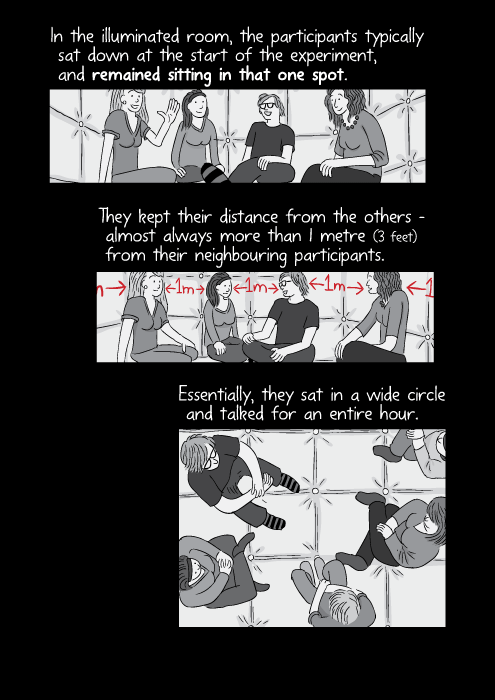
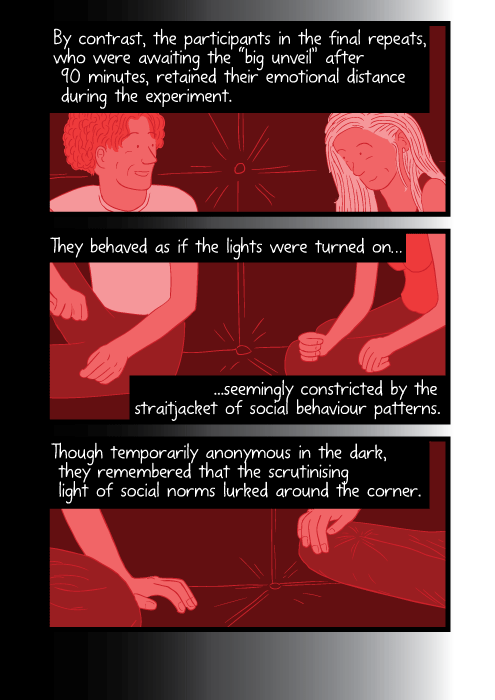
• The experiment was repeated in 2012 for an episode of a Discovery Channel TV show. This 2012 repeat, a single 60-minute session, did not observe physical intimacy that resembled the original 1972 sessions. The participants kept their distance from each other.
 (de)
(de)
 (fr)
(fr)
 (it)
(it)
 (ru)
(ru)
This website supports three options for navigating through the comic: mouse scroll wheel, left and right keyboard arrows, and touchscreen.


Amazing. You feature such relevant and important work. Don’t ever stop.
I loved this format. Thank you!
These feel like they deserve a distribution technique similar to Chick Tracts or Sithrak Tracts.
Gotta agree with Doug. I want to thank you for this information, presented in graphical form. But I want to slap you for the web interface.
Excellent comic! I passionately loathe your scrolling system though. I was navigating by mouse until the clicking of my mouse wheel started to annoy me, and then I switched to the keyboard. Big mistake. The page started jumping all over the place, and I really had to fight to read the remainder of the comic. (And just pressing the left key while writing this comment whizzed me back to the start. Very annoying.)
Gotye brought me here. Excellent read
Thanks Stu. Awesome as always.
Wow dude! Thanks for making information entertaining! Double points for being a psychology experiment.
Page 54 sums it all up beautifully. Makes you wonder if social norms arose to prevent the misgivings of a minority to the detriment of the majority.
This is an awesome comic, Thank you. I teach about the Deviance in the Dark study in my Social Psychology class and your visuals here explain it very well.
Loved the concept but a bit hard to read the print even after zooming. On a PC ATM but will check it on the iPad and hope it’s better. Looking forward to reading the one on peak oil.
WORST INTERFACE EVER. I wanted to read this but could not. Highly frustrating! Please post in non-clever format, this looks amazing.
Have you tested yor site on iOS Safari?
Because it doesn’t look like it.
Also kudos for unironically rejecting anonymous comments on an article espousing the benefits of anonymity.
I just loved the Theme Hospital references
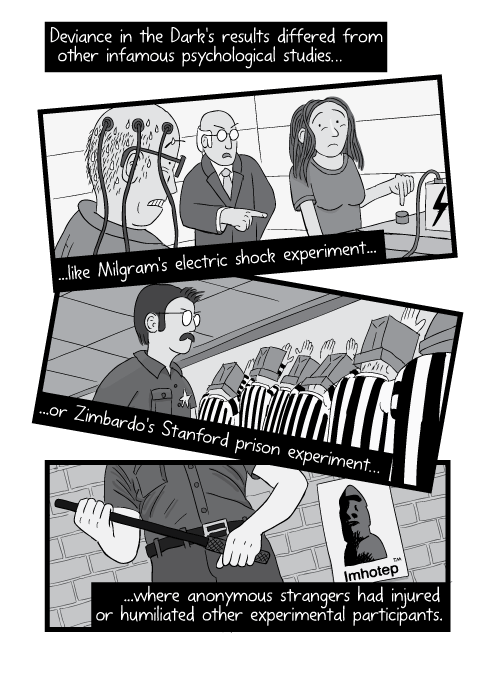
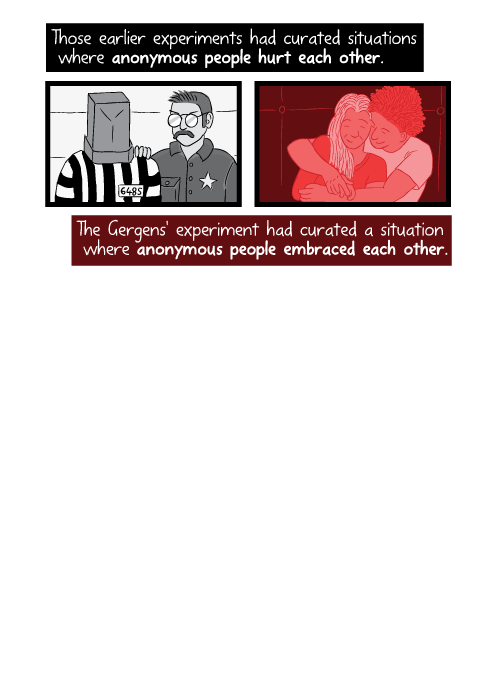
Wonderful illustration of an interesting case. I would like to add that Milgrim’s and Zimbardo’s experiment also added authority in the environments and might have complicated the relationship of anonymity and “bad” behaviours.
So great and beautiful storyline. Thanks.
Touching and perceptive and super positive. I wonder how the experiment would have changed across cultures?
Awesome. Thanks Stuart!
Made me think about why I enjoy travel to foreign lands. I feel far more anonymous and uninhibited on a Tokyo street corner than I do in my local grocery store.
In Tokyo I know that I will likely never meet those people again. Not the same in my own neighbourhood.
Fantastic. Thanks Stuart!
Wonderful work!
Interesting choice to create a comic from; I am too poor to contribute financially but it’s good work, thank you. Regarding the Research rationale, one is led to asume the researchers had never heard of gay darkrooms? They did exist in the 70s, surely.